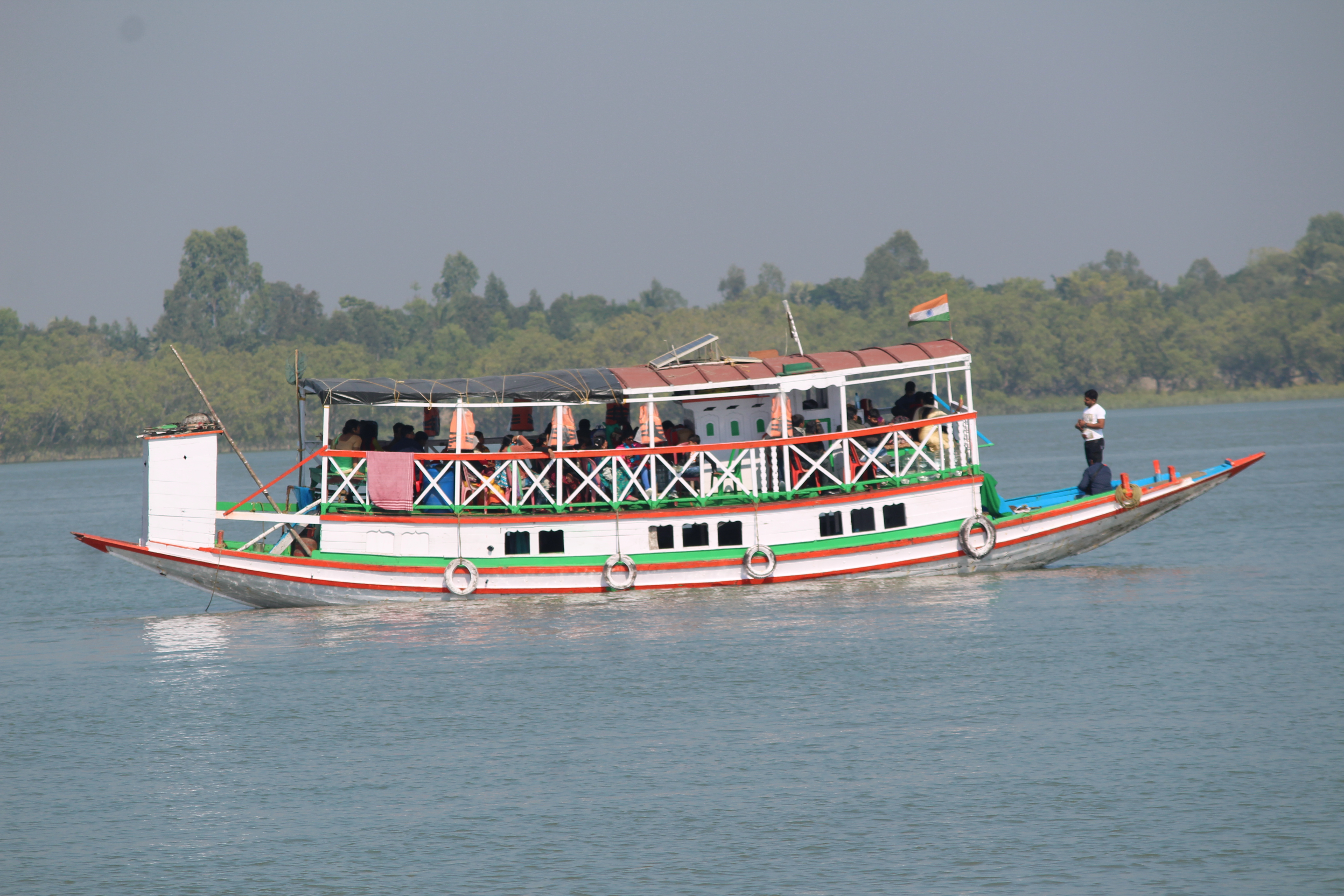
It’s with great anticipation that I waited for Bharat Darshan to begin. Having heard of it from previous batches and seen videos and write ups of it on the internet, one could just thank the stars and feel proud of himself/herself to have actually landed in a position to experience it firsthand. After consulting with friends and immediate seniors as to how to pack your luggage and travel lightly, I tried my best to stuff all my luggage in one small cabin bag and a backpack, much to the surprise and envy of my group members, some of them travelling with two big suitcases easily weighing more than 30 KGs combined.
GLship & the Coordination
A pre-tour meeting of all the GLs, LOs and treasurers was called to brief them about the roles and responsibilities. I was GL-4 ie Group leader for the last leg of WST. It didn’t bother me much, as I could be carefree for the first 30 days atleast. We were told that the Liaison Officer was to coordinate our visits from one place to another and the Group Leader, once the group lands in a place, has to coordinate the local visits and attachment. The GLs were also to take care of carrying and gifting the momentos. We distributed them almost equally among all the group members.
We started from the academy on 16th of Dec 2018 to Sahranpur railway station, from where we were to move further to Jammu for the Army attachment, arguably the high point of WST for all the groups for all these years. We reached Jammu railway station the next day morning and were received by an Army Officer, who along with his troops would escort us to Poonch district. Our group of 18 was divided into two groups of 10 and 8.The bigger group would go to ***** regiment guarding a ******. Another group went to **** battalion.
In this travelogue, I would like to focus on two attachments- West Bengal and Statue of Unity, which apart from the obvious army attachment left a lasting impression on me.
West Bengal
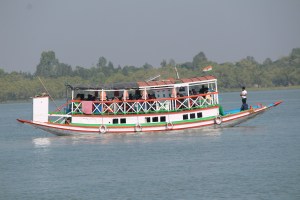
After a brief stop over at Kolkata for lunch, we left for Sundarbans by car. After reaching the last point which could be reached by road, we took a ferry to a guest house for a night halt in middle of sundarbans delta. It was a state government managed guest house, decent enough. After dinner, we rested for the night. Next morning, we were woken up to the hustle and bustle of tourists swarming the guest house which was also a stop over for tiger sighting, crocodile watching and other flora and fauna. There were many tourists, mostly Bengalis on that weekend. I had heard that Bengalis love to travel a lot. I could see that first hand that day.
We boarded the jetty by 9AM. It was a bright sunny day with cool breeze blowing past us. I was elated and feeling very relaxed just being there. The jetty ferried us all day long along various creeks, rivers and backwaters, occasionally spotting birds, crocodiles and salamander, but never a tiger.
Though it was a beautiful setting with friends to your company, all of us felt bored after lunch. Some even took a nap, having done with the sight seeing.
By 7 in the evening, we reached the guest house. Initially it was a two day stay and sundarbans, but the schedule was changed to leave Sundarbans National Park the next day morning for Purba Bardhaman. The Liaison officer was accommodative enough to reschedule our itinerary.
The next attachment was supposed to be Nadia – an Aspirational district, but then changed to Purba Bardhaman. The schedule, the DM had planned for us was jam-packed. There were many visits to different initiatives undertaken in the district, like Home for Orphan and abandoned girls, solid waste management, Kanyashree clubs in schools, MGNREGA activities etc.
Purba Bardhaman is a relatively new district created after bifurcation of erstwhile Bardwan into Purba Bardhaman (PB) and Paschim Bardhaman.
PB is a fertile and most prosperous district of West Bengal. Agricultural activity if the main stay of the people of PB, Four harvests a year is not uncommon in PB.
Some of the noteworthy aspects of the district were
Highlights of Purba Bardhaman District
- PB generates the highest number of Man-days work under MGNREGA in India. Virtually all developmental works are seen to be undertaken under MGNREGA.
- Dokra metal casting work is found in PB. It’s a lost wax art perfected by craftsmen of PB, who have won many civilian awards including Padma Bhushan
- PB district administration is the first collectorate in WB to get ISO 9001:2000 certified
- The DM took special interest in setting up/renovating a shelter home for orphan girls. It was a memorable experience visiting the same. The girls were overjoyed by our visit.
It sensitized us towards their needs and their welfare which is often neglected amongst highly visible and glamorous role a DM performs like Revenue collection, Law & Order maintenance, which are nonetheless very important.
Children and women welfare, elderly care, soldiers welfare, BPL etc are some of the soft areas which should be focused on by administrators like us
- Waste management facility which produces organic fertilizer
Some of the learning’s and take home points for me were
- MGNREGA is a potent tool to fight rural poverty and distress migration. Apart from that, developmental works could be undertaken through the scheme to build productive assets for the rural community
- As a SDM or DM, one should take up a pet project and work on it. This will give meaning to your work, for which we all had slogged hard to get in. It can be anything like improving farm productivity, building a shelter home, promoting tourism etc
- Need to empower the people at grassroots level who are the main stakeholders of government at all levels. In PB district, there were many Self Help Groups (SHGs) who formed a cooperative to sell their products like handmade toys, dyed clothes etc.
This point was reiterated multiple times in the classroom sessions after we returned from Bharat Darshan. As All India Service officers, we come and go. But people continue to stay there and are the real beneficiaries of governance.
Beauty of the Bengal
Country side
Apart from the administrative mechanism, what I really enjoyed about Bengal is the country side view. There was a sense of timelessness and oneness with nature. The villagers lived very close to their source of livelihood. Every home had a small pond in front which was used to grow fishes and ducks. The farmland was next to the homes. There was a seamless integration of Bengal huts, agricultural land, ponds and the people.
I made up my mind to come one day with family or atleast alone in future and spend couple of days in that country side.
Statue of Unity, Narmada District
exchequer or a bold imaginative
thinking
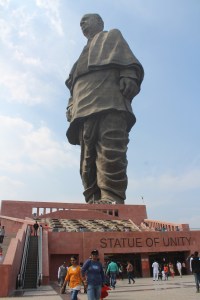
I was in awe seeing the statue of unity upclose. Though there are economic arguments about the need for such a project, yet looking from another angle, I could appreciate the bold and imaginative thinking displayed by the government. It also symbolizes the aspirations of the people. The expertise gained from executing such a project in record time could be very well utilized for other public projects. Borrowing the analogy from Balaji Viswanathan of Quora fame, Massive projects like Bullet train or statue of unity are like big mountains which change the ecosystem surrounding them. I’m all for a rigorous project appraisal and judicious use of public money. At the same time, the soft power symbolized by these projects is a boost to country’s morale.
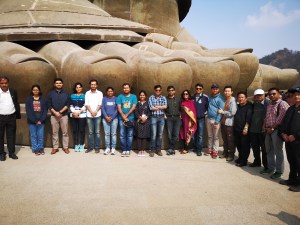
All in all, the WST was a once in a lifetime thing, that I carry with me to the end. The bonds and friendships built during the WST is something invaluable. I was sharing with my group members that in Phase-3 or Phase-4 we should all again come together and have a mini Bharat Darshan J
The end

 KEERTHI KIRAN PUJAR
You have a good writing style, continue, all the Best.
LikeLike
Thanks Uncle and that too coming from an English professor 👍
LikeLike