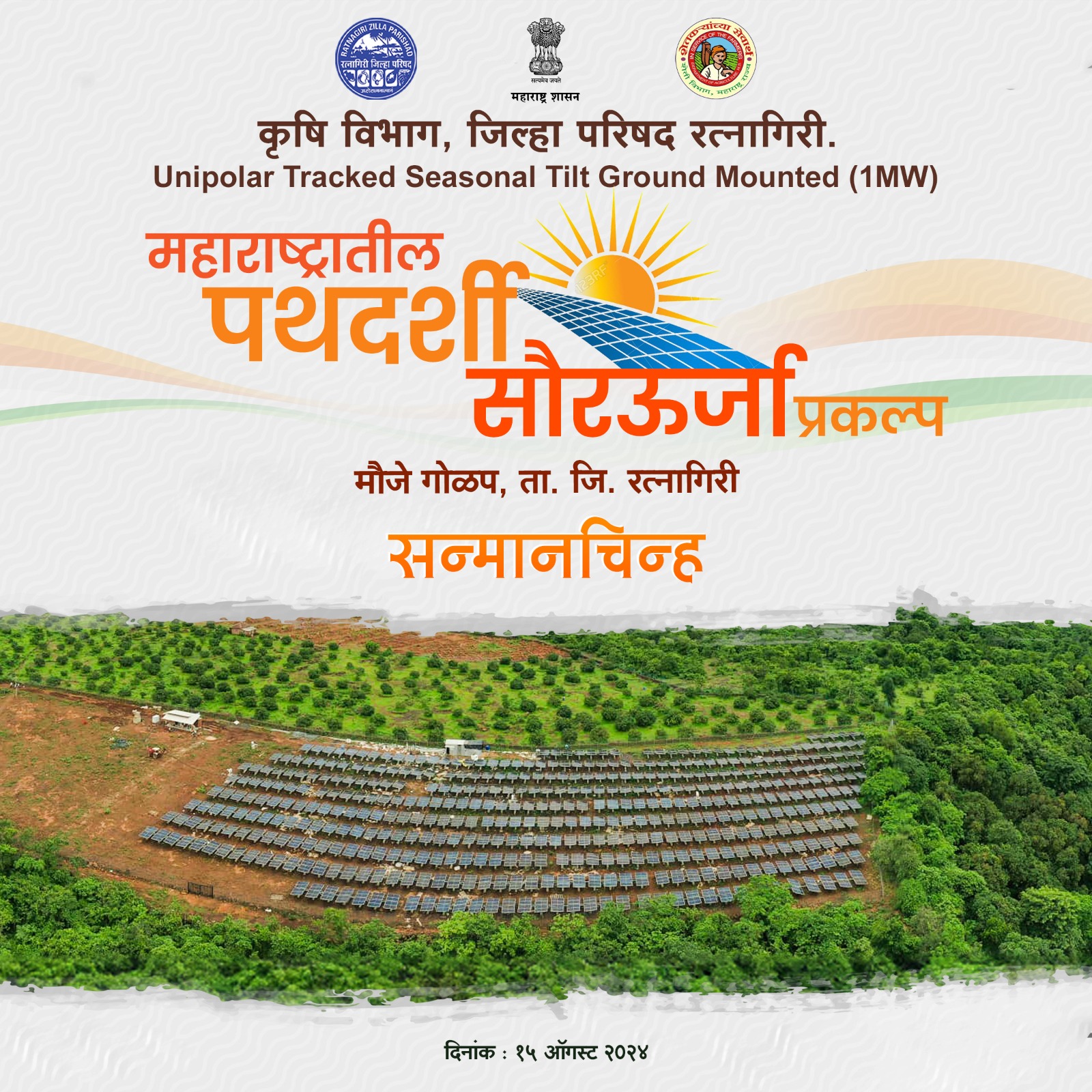
It takes a bit of Idealism, fool hardiness, calculated risk to do something like – to setup a Ground Mounted Solar Power Plant of 1MW with Power Purchasing Agreement, by Zilla Parishad. Now what a rural Self Governing Body like Zilla Parishad has to do with commercial power production business. When even traditional Discoms are treading slowly on the path of Renewable Energy (RE) production, getting into commercial solar power production is the last thing expected by a government entity that works in rural health, education, water supply, roads, bridges, animal husbandry etc
But a keen eye would immediately realize the immense potential offered by RE sector in bolstering the rural political economy. It can be said, at the cost of audacity, that Zilla Parishad Ratnagiri has innovated a new business model in rural political economy. I choose to say rural political economy because, the 73rd Constitutional Amendment has empowered the three tier local self-governing bodies (Gram Panchayat, Panchayat Samiti and Zilla Parishads) with Funds, Functions and Functionaries.
- Funds can come from levying property tax, water usage charges, sanitation charges, stamp duty charges, Central and State Finance Commission, Grants by the government etc.
- Functions include providing rural connectivity, drinking water, sanitation, education, health care etc
- Functionaries include elected representatives like Sarpanch, Panchayat Samiti & Zilla Parishad Chairman, officers and staff manning the three tier structure.
Problem Statement – Functionaries struggle to ensure Functions with Funds, which are always less than needed.
A multi-pronged approach is needed to tackle the above problem. A part of the problem, public utility light bills like street light bills, water supply bills, miscellaneous light bills, can be tackled sustainably through Renewable energy.
So far RE in action to tackle the light bills is seen in the form of Roof Top Solar(RTS). It has its pros and cons.
Advantages
- Separate land not required
- Less capital investment
- Net metering – Overall cost to consumer and Discom is zero
Disadvantages
- Suitable for captive power consumption only – YOU CAN’T EXPORT EXCESS ROOF TOP POWER? Not yet! Say a household or hospital or school has vast expanse of roof top area and they have installed excess solar capacity and generating power over and above their requirement, what about the excess energy produced? THE STATE DISCOM DOESN’T BUY THE EXCESS POWER AND REIMBURSE THE CUSTOMER. SUCH POLICY NOT YET IN PLACE!
- Achieving net metering with distributed meter connections is challenging (Say you have street lights in 100 different locations, net metering all of them is not easy because of logistics and equipment involved – inverter, meter, battery etc
In order to complement RTS, we propose GROUND MOUNTED SOLAR POWER PLANT WITH POWER SALE AGREEMENT. This is least treaded path, and no Local Government Body has even looked at this direction and our proposed solution.
You just need two following things to implement the above solution – Land and Funds. In the district, the Government is the biggest land owner – Revenue land lying unused, unused land in industrial areas in remote taluks, barren land, land with local bodies etc. Assured funds is available in the form of District Planning Committee (DPC) funds. A minimum of 3% of the DPC funds is earmarked for development of RE.
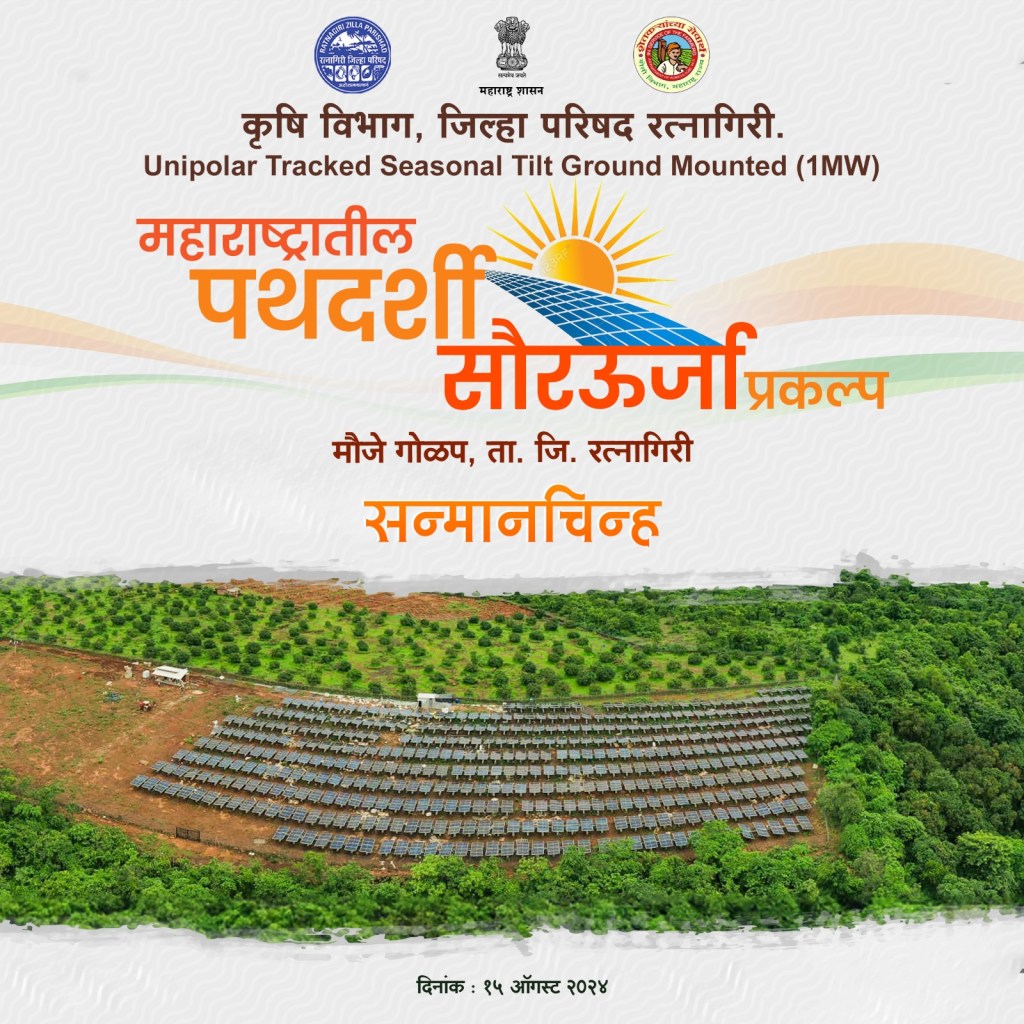
In Ratnagiri, the Zilla Parishad entered into an agreement for 5 acres, with one Gram Panchayat which owned land needed for setting up the solar plant. As compensation, ZP Ratnagiri agreed to pay for all the public utility light bills of the Gram Panchayat – street lights, schools, anganwadis.
Funds was made available from the DPC under 3% Renewable Energy head. A reputed consultant was appointed to prepare the Detailed Project Report (DPR). The necessary Technical Sanction for the DPR was obtained from Maharashtra Energy Development Agency(MEDA). The Grid Connectivity and miscellaneous permission was obtained from Maharashtra State Electricity Distribution Company Limited (MSEDCL).
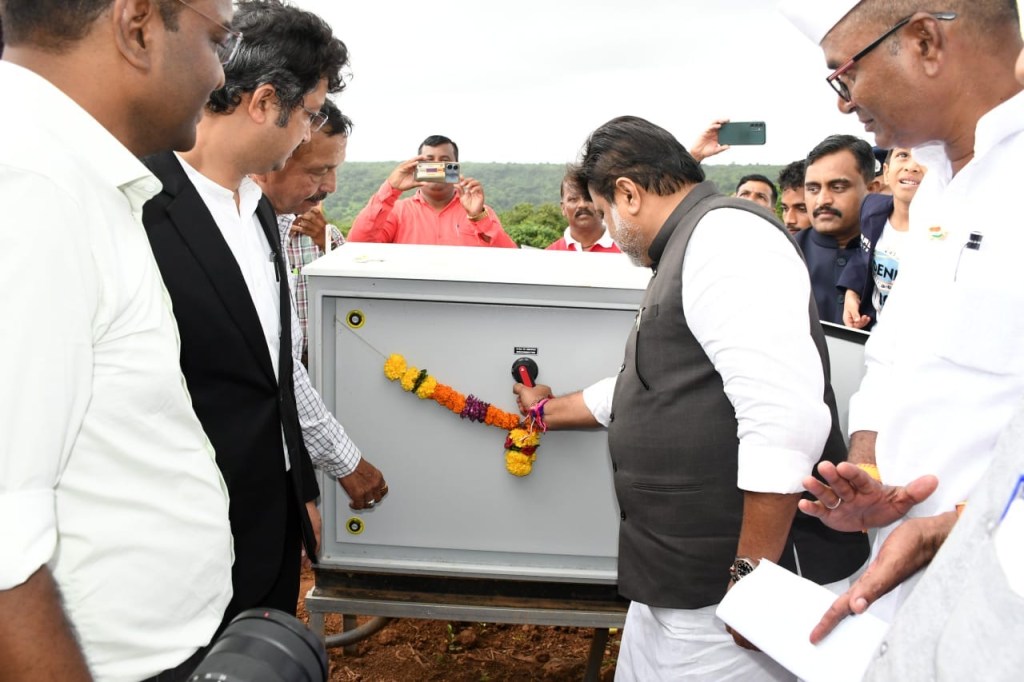
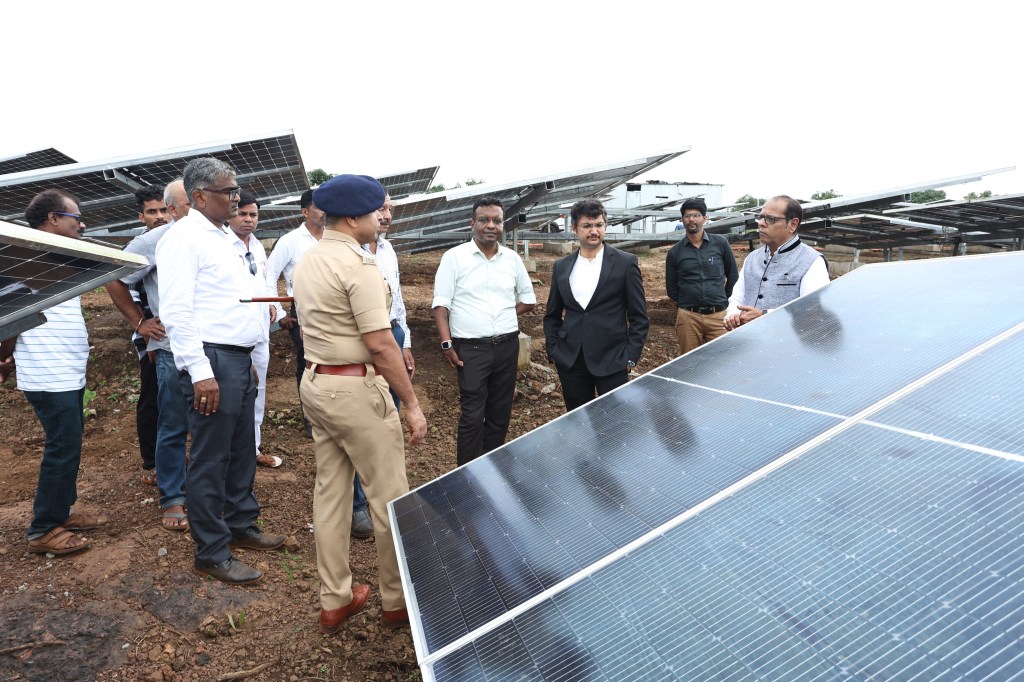
The project took 6 months to complete with further couple of months for permissions, trial and commissioning. Power Purchase Agreement (PPA) was done with a private company negotiating per unit rate more than what MSEDCL offers (Rs 3.30 per KWh).
The annual revenue earned by the ZP from the 1MW plant, minus the maintenance charges, will be distributed equitably to all the Gram Panchayats. We took the Fifteenth Finance Commission’s distribution formula to Gram Panchayat as proxy for ploughing back the money to the Gram Panchayats. In simpler words, the Gram Panchayats will get their share based on population and geographical area. This is what we claim to be a New Business Model in Rural Political Economy.
The advantage of the above solution are
- Able to use unused land to generate power at scale which can be exported
- Easy to maintain, supervise, repair as the plant is in one centralized location
- Can tackle distributed meter bills
- Power sale to commercial consumers like Hotels, Colleges, Resorts etc will fetch even higher rates/unit as compared to industrial consumer
However, it needs to remembered, the solution proposed is quite technical and procedural. Moreover, Solid Inter disciplinary coordination required between the Power producer(here in our case Zilla Parishad), State Discom, State Power Transmission, Renewable Energy Regulator, Private Power Purchaser.
IT CAN BE CLAIMED THAT ZILLA PARISHAD RATNAGIRI IS THE FIRST LOCAL SELF-GOVERNING BODY IN INDIA TO COME UP WITH THE ABOVE SOLUTION . (Still waiting for someone to dispute this claim :-))
Going ahead, we are starting our second project in Guhagar block, third one coming up in Ratangiri block, and eventually each of the 9 blocks will have one 1MW plant. However, we want to consolidate the capacity at one place to save on the auxiliary infrastructural costs like transmission lines, security, maintenance etc.
With both RTS and Ground Mounted Solar, we can nudge the district to carbon neutrality within half a generation. With such considerable capacity of RE installed in the district, the rural finances are bolstered, ease of doing business is improved by offering cheaper power to the companies in the district, overall health of Discoms improved. It also opens doors for rural livelihood by creating an army of engineers, technicians, surya mitras, etc. The potential is just waiting to be exploited.


 KEERTHI KIRAN PUJAR